
BSP vs. G Threads: Key Differences
| Feature | BSPP (G Threads) | BSPT (R/Rp Threads) |
|---|---|---|
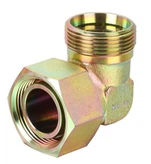
| Full Name | British Standard Pipe Parallel | British Standard Pipe Tapered |
| ISO Standard | ISO 228-1 (Non-pressure-tight) | ISO 7-1 (Pressure-tight) |
| Thread Type | Parallel (Straight) | Tapered (1:16锥度) |
| Common Symbol | G (e.g., G1/2", G3/4") | R (External), Rp (Internal) |
| Sealing Method | Requires seal at thread end (Washer, O-ring, or mating surface) |
Self-sealing via thread deformation (Metal-to-metal taper fit) |
| Thread Angle | 55° Whitworth profile | 55° Whitworth profile |
| Pressure Rating | Low-to-medium pressure (e.g., water, air) |
High pressure (e.g., hydraulics, fuel) |
| Compatibility | G = BSPP (identical) | R/Rp = BSPT (identical) |
| Interchangeable? | ❌ Not compatible with BSPT/NPT | ❌ Not compatible with BSPP/NPT |
Critical Clarifications
BSP is an umbrella term:
BSPP = Parallel threads = G threads (ISO 228-1).
BSPT = Tapered threads = R/Rp threads (ISO 7-1).
G threads are ONLY parallel:
"G" always refers to BSPP (e.g., G1/2", G1").
Seals via external components (e.g., washer).
BSPT uses R/Rp symbols:
R: External tapered thread (e.g., R1/2").
Rp: Internal tapered thread (e.g., Rp1/2").
Seals via taper engagement (no washer needed).
Never mix BSPP (G) & BSPT (R/Rp):
Parallel (G) and tapered (R) threads cannot seal or thread together.
BSP vs. NPT (US Standard):
BSP: 55° angle, 1:16 taper (BSPT only).
NPT: 60° angle, 1:16 taper.
⚠️ Incompatible – mixing causes leaks/thread damage.
How to Identify
G (BSPP):
Threads are parallel (constant diameter).
Marked with "G" (e.g., G3/4).
BSPT (R/Rp):
Threads are tapered (diameter changes).
Marked with "R" (external) or "Rp" (internal).
Summary
G thread = BSPP = Parallel + needs washer seal (ISO 228-1).
BSPT ≠ G thread = Tapered + self-sealing (ISO 7-1).
Always use symbols (G, R, Rp) – avoid ambiguous "BSP" alone.
💡 Design Tip: Use BSPT (R/Rp) for high-pressure systems; BSPP (G) for low-pressure/sealed-face applications.